
Client Savings Ticker
$27,178,287.26
*based upon estimated national average cost
of oxygen per liter*
(800) 923-6711
logo
Oxygen Therapy Equipment for Veterinary Clinics
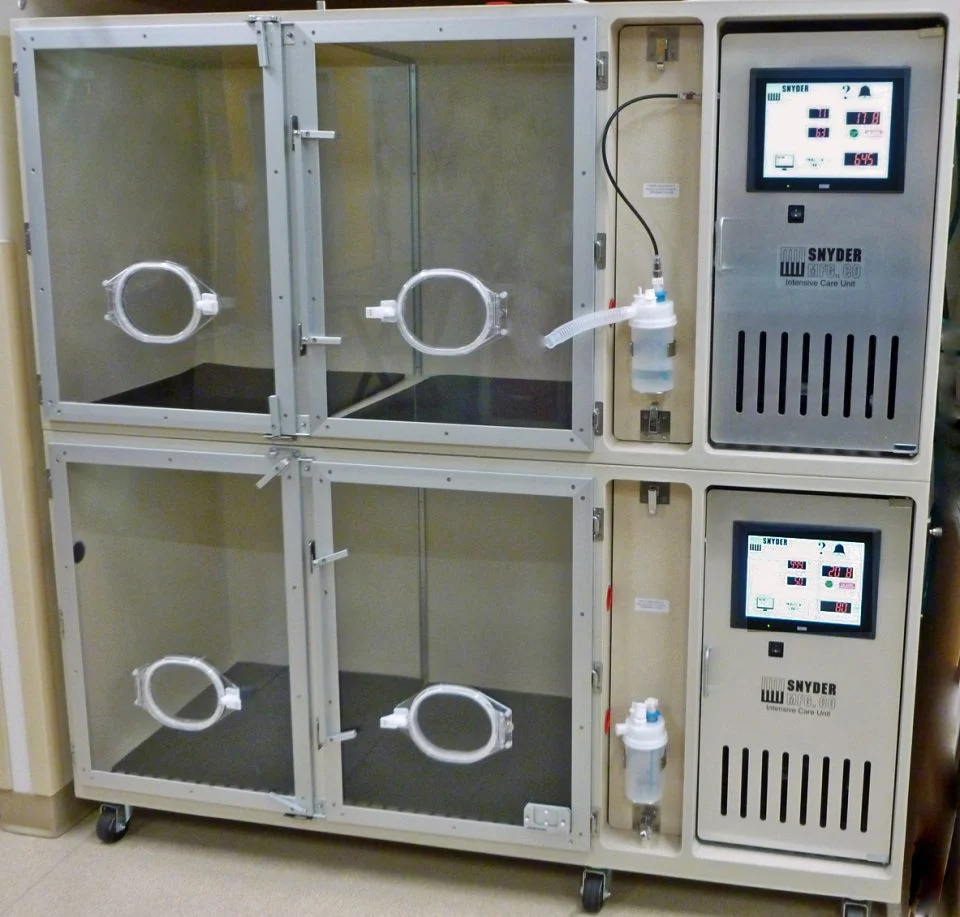
Snyder-ICU-8a
Oxygen Therapy Equipment for Veterinary Clinics
TLDR
Veterinary clinics use oxygen therapy to stabilize critical patients, support anesthesia recovery, and treat respiratory conditions in dogs, cats, and exotic animals.

Core equipment categories include Airnetic Generator, compressed gas cylinders, veterinary oxygen cages, flowmeters, masks, and in-line delivery systems.

Equipment selection depends on patient size, case volume, available power, and whether the clinic handles emergencies, surgeries, or both.

Airnetic Generators are the most cost-effective long-term option for steady-use clinics; cylinders provide backup reliability and portability.

Proper oxygen flow rate calibration and cage oxygen concentration monitoring are required for safe patient outcomes.
What Oxygen Therapy Equipment Does in a Veterinary Setting
Supplemental veterinary oxygen therapy delivers concentrated oxygen to patients who cannot maintain adequate blood oxygen levels on their own. This applies to post-surgical recovery, respiratory distress, trauma cases, and anesthesia support.

Unlike human medical oxygen systems, veterinary applications require equipment that accommodates a wide range of patient sizes, from small rodents to large-breed dogs, and species with different respiratory physiology.

Oxygen delivery in a clinic is not a single device. It is a system. The source connects through regulators and flowmeters to a delivery interface: a mask, nasal cannula, flow-by hood, or an oxygen cage. Each component must be matched to the clinical scenario.

The goal is to achieve and sustain a target peripheral oxygen saturation (SpO2) without causing oxygen toxicity from prolonged high-concentration exposure.
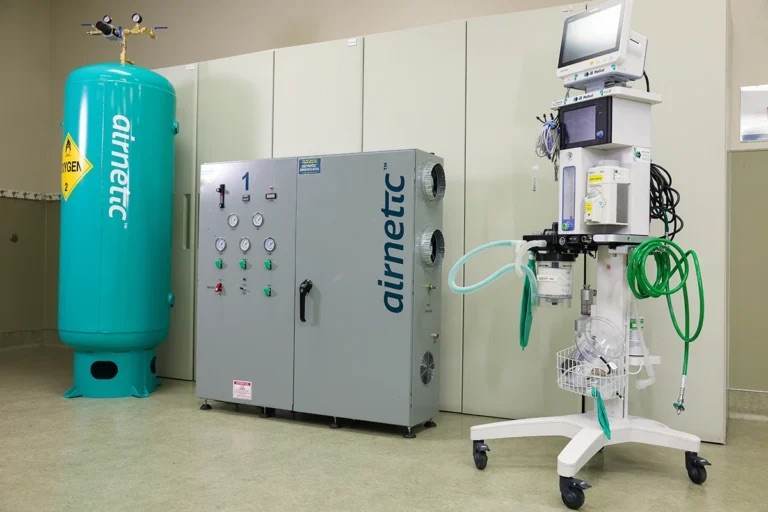
airnetic-oxygen-therapy-equipment-veterinary-clinics
Equipment Categories: Functions and Use Cases
Oxygen
A veterinary oxygen pulls ambient air through a molecular sieve to produce 90-95% pure oxygen. These units require no gas delivery, no cylinder exchange, and operate on standard electrical power.

Best for: High-use clinics, ICU oxygen cages, steady post-op support

Output: Scalable with dual-outlet or high-flow models
Compressed Oxygen Cylinders
Cylinders store medical-grade oxygen under high pressure and provide reliable backup or emergency access. They are portable, independent of electricity, and capable of high peak flow delivery during acute crises.

Best for: Emergency use, field work, power outage backup, surgical suites

Common sizes: E-cylinders (portable), H-cylinders (wall-supply)

Limitation: Ongoing refill cost and cylinder storage requirements
Veterinary Oxygen Cages and Chambers
An oxygen enrichment cage encloses the patient in a controlled atmosphere, allowing passive oxygen therapy without restraint or a physical interface on the animal. This is particularly valuable for cats, birds, and animals in acute respiratory distress.

Key feature: Integrated oxygen concentration monitoring (target: 40-60% FiO2 for most patients)

Look for: Temperature and humidity controls, easy access doors, transparent construction for patient observation

Limitation: Oxygen concentration drops each time the door is opened
Flowmeters and Regulators
Flowmeters control the rate at which oxygen reaches the patient. Regulators reduce cylinder pressure to a safe, workable level. These components are required regardless of the oxygen source and must be matched to the flow range appropriate for veterinary patients.

Low-flow meters (0-3 LPM): Small mammals, cats, birds, nasal cannulas

Standard meters (0-15 LPM): Dogs, large animals, anesthesia circuits

High-flow meters: Large cage fill rates, multiple simultaneous patients
Delivery Interfaces
The interface determines how oxygen reaches the patient directly. Options include:

Masks: Quick application, variable seal, moderate FiO2 delivery

Nasal cannulas: Hands-free, well-tolerated for stable patients

Flow-by oxygen: Low-stress delivery for fractious or distressed patients

Intubation/anesthesia circuits: Full control over inspired oxygen in surgical settings
Cylinders: When to Use
Most well-equipped clinics operate both. The decision of which to rely on depends on the clinical context.
Factor
Airnetic Generator
Cylinder
Ongoing cost
Low (electricity only)
Recurring refill expense
Emergency use
Immediate high-flow access
Power dependency
Requires AC power
Fully independent
Portability
Stationary
Portable (E-cylinders)
Best for
Steady-state ICU, cages, post-op
Emergencies, field, backup
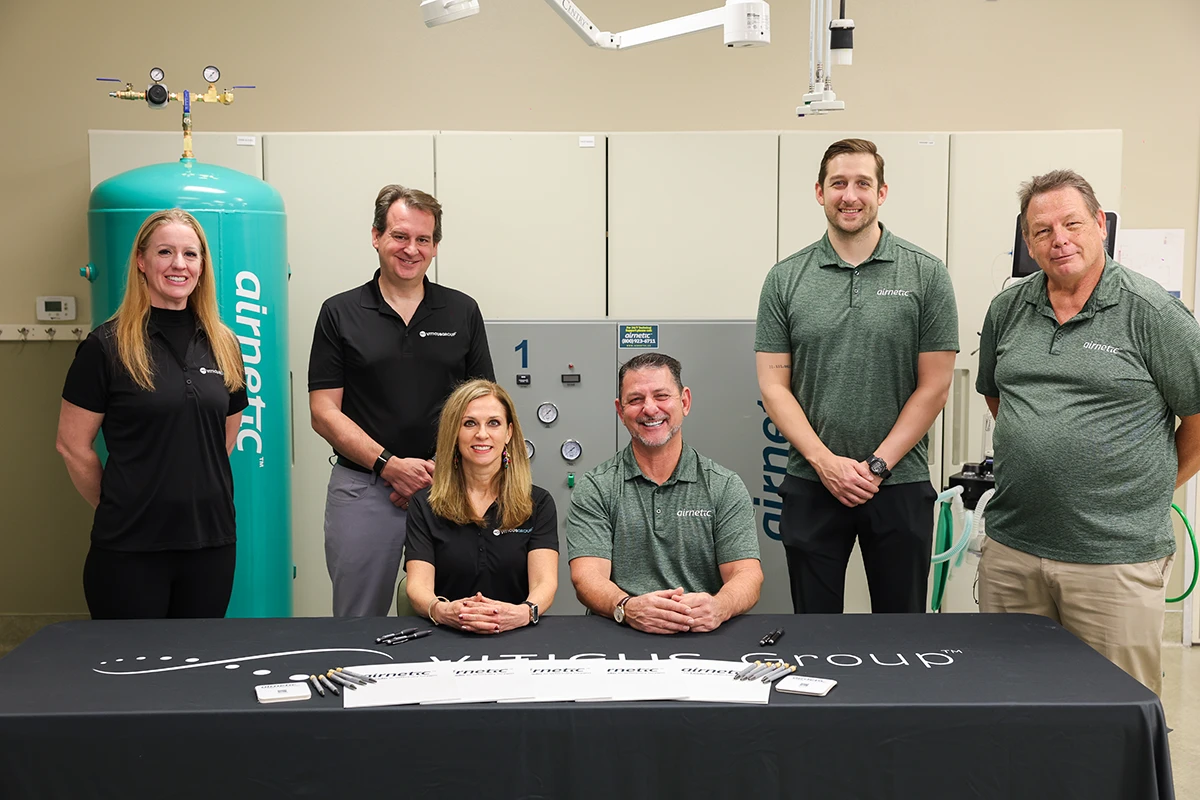
airnetic-wvc-2026-mandalay-bay-exhibit-hall
How Clinics Evaluate and Select Oxygen Equipment
When building out or upgrading an oxygen delivery system for veterinary use, clinics typically evaluate the following:

Patient population: Species treated and typical body weight ranges determine oxygen flow requirements and cage sizes needed.

Case volume and acuity: Emergency and critical care clinics need higher flow capacity and redundant systems.

Facility layout: Oxygen piping systems or centralized manifolds are practical in larger hospitals; individual units work well in smaller practices.

Regulatory compliance: Medical gas equipment in veterinary facilities may be subject to state or OSHA requirements, particularly for cylinder storage.

Budget and total cost of ownership: Initial equipment cost vs. ongoing refill or maintenance expenses over 3-5 years.

Redundancy planning: At minimum, every clinic should have a backup oxygen source in case the primary system fails.
Common Mistakes When Setting Up Veterinary Oxygen Systems
Using without a cylinder backup. Power goes out. Any clinic relying solely on one source is one outage away from a critical gap.

Selecting an oxygen cage without an integrated FiO2 sensor. Without real-time concentration monitoring, there is no way to verify that therapeutic oxygen levels are being maintained.

Under-sizing flowmeters for the patient population. A 3 LPM meter is insufficient for large-breed dog emergencies.

Neglecting cylinder testing and inspection schedules. Cylinders have hydrostatic test requirements that, if overlooked, can result in unsafe equipment and compliance violations.

Assuming all concentrators produce the same purity. Output purity degrades over time. Clinics should verify purity with an oxygen analyzer periodically.

Skipping staff training on delivery interfaces. Incorrect mask placement or flow-by technique reduces the effectiveness of any therapy regimen.
airnetic-vet-clinic-oxygen-delivery-system
Frequently Asked Questions

Most protocols target 40-60% FiO2 for short-term stabilization. Concentrations above 60% sustained for several hours can cause oxygen toxicity. Always monitor with an integrated sensor and adjust flow accordingly.

Flow rates vary by patient size and delivery method. Nasal cannulas typically require 50-100 mL/kg/min. Cage fill rates vary by cage volume. A standard 10 kg dog receiving flow-by delivery may require 2-5 LPM to maintain therapeutic levels.

A regulator reduces high cylinder pressure to a safe working pressure. A flowmeter controls the rate of gas delivery to the patient. Both are required when using compressed gas cylinders.

Concentrators should be serviced per manufacturer guidelines, typically annually. Cylinder pressure should be checked before each use. FiO2 sensors in oxygen cages require periodic calibration. Flowmeters should be tested for accuracy regularly.

In the U.S., medical oxygen is regulated as a drug by the FDA. Cylinders fall under DOT regulations. Facilities should follow AVMA guidelines and any applicable state veterinary board requirements. Storage areas for compressed gas must comply with NFPA 99 or OSHA standards.

A single high-quality concentrator paired with one or two E-cylinders for backup is a practical and cost-effective setup for most small practices. This combination covers both routine therapy and emergency situations.

Flow-by oxygen involves holding a mask or tubing near the animal's face without a tight seal. It is used with fractious, dyspneic, or highly stressed patients who would not tolerate a tight-fitting mask. It delivers lower FiO2 than sealed interfaces but causes less distress.

Yes. Oxygen cages are particularly effective for birds and small exotics. Flow rates and cage sizing must be adjusted for the patient. Some species have different respiratory physiology, so consult species-specific guidelines when setting target FiO2 levels.

A practical checklist includes: verified oxygen source (concentrator or cylinder), functional flowmeter with appropriate range, delivery interface options (mask, cannula, cage), SpO2 monitor, FiO2 sensor for cage use, cylinder pressure gauge, and documented backup plan.

Related Resource
Clinics evaluating equipment for a full respiratory support setup can also review our guide to veterinary medical gas systems and piping for information on centralized oxygen delivery infrastructure.
logo-white

Airnetic LLC is a Nevada-based company that provides professional-grade oxygen systems since 2013.

soc-fb
soc-yt
soc-in
Contact Us
footer-icon-pin
2480 N. Decatur Blvd., Unit 125, Las Vegas, NV 89108
footer-icon-email
footer-icon-phone
(800) 923-6711
Newsletter
Get the latest news & updates


    logo
    Liters of Oxygen Created
    4,951,323,312,000
    ©Airnetic 2026. All rights reserved.